

Pacefit Review 2026 — Legit Walking App or Just Another Rewards Trap?
If you’ve been searching for apps that claim to pay you for walking, you’ve probably seen apps like Pacefit popping up everywhere.
The idea sounds simple:
👉 Walk more → earn points → convert to cash
But if you’ve tried similar apps before, you already know the reality isn’t always that straightforward.
So the real questions are:
- Is Pacefit legit or a scam?
- How much can you actually earn?
- And more importantly — is it worth your time?
I tested the app myself and went through all the features. Here’s a complete breakdown of how it really works — including some things most reviews don’t mention.
What Is Pacefit?
Pacefit is a fitness-based reward app that combines:
- Step tracking
- Daily login bonuses
- Mini reward games
- Ad-based earning systems
On the surface, it looks like a “get paid to walk” app.
But after using it, it’s more accurate to say:
👉 It’s a reward app that uses walking as an entry point
This difference matters a lot when it comes to expectations.
First Impression — Daily Spin & “Big Reward” Design
When you first open the app, you’re immediately introduced to the spin wheel.
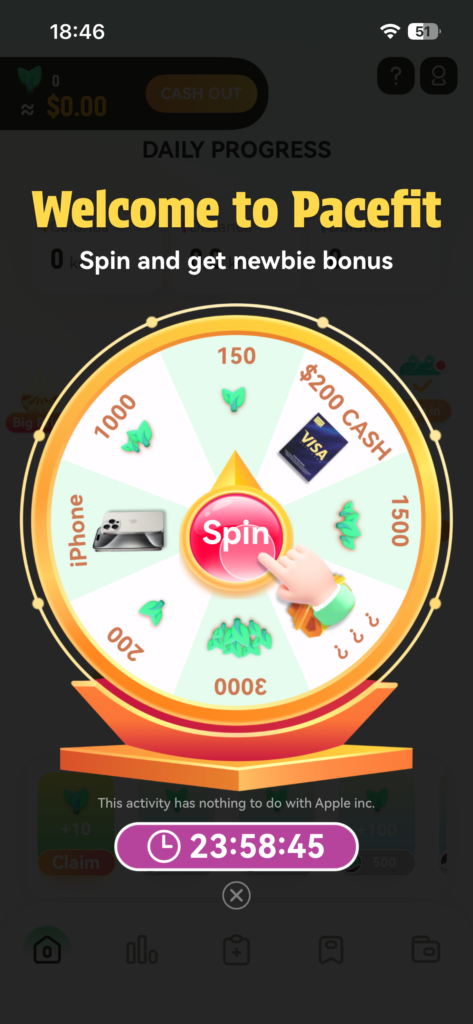
You get:
- One free spin per day
- Earn random points
- A chance at large rewards (like an iPhone)
This is a very common design in reward apps.
👉 It creates excitement early on
But realistically:
- Most spins give small point rewards
- Big prizes exist, but are extremely rare
This is the first place where you start to see the app’s engagement strategy.
The Ad Loop — How You Actually Earn More
Right after spinning, the app gives you another option.

👉 “Watch an ad to spin again”
This pattern repeats across the app.
You’ll notice:
- Extra spins require ads
- Extra rewards require ads
- Faster progress requires ads
So while the app says “walk to earn,” in practice:
👉 You earn more by interacting with ads than by walking
Points Value — Transparent but Slow
Eventually, you’ll check how much your points are worth.
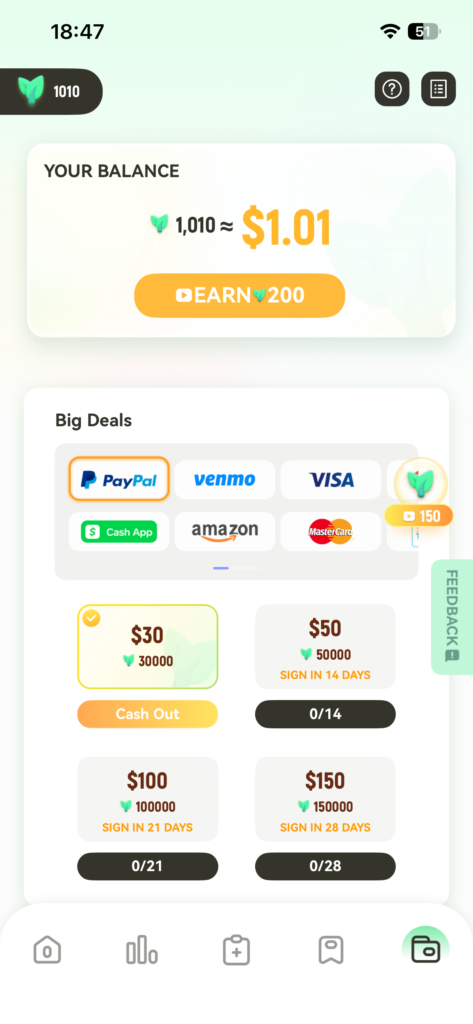
The conversion is clear:
👉 1000 points = $1
This is actually a good thing:
- No hidden math
- Easy to track earnings
But once you start calculating your daily gains:
👉 You realize earnings add up slowly
Time-Based Rewards — Keeping You Coming Back
Another key system is the timed chest + task system.
You can:
- Claim rewards at specific times
- Complete tasks for bonus points
This introduces a common mechanic:
👉 Habit building
The app encourages you to:
- Open it multiple times a day
- Stay consistent
- Keep engaging
Step Tracking — The “Hook” Feature
Since this is marketed as a walking app, steps are part of the system.
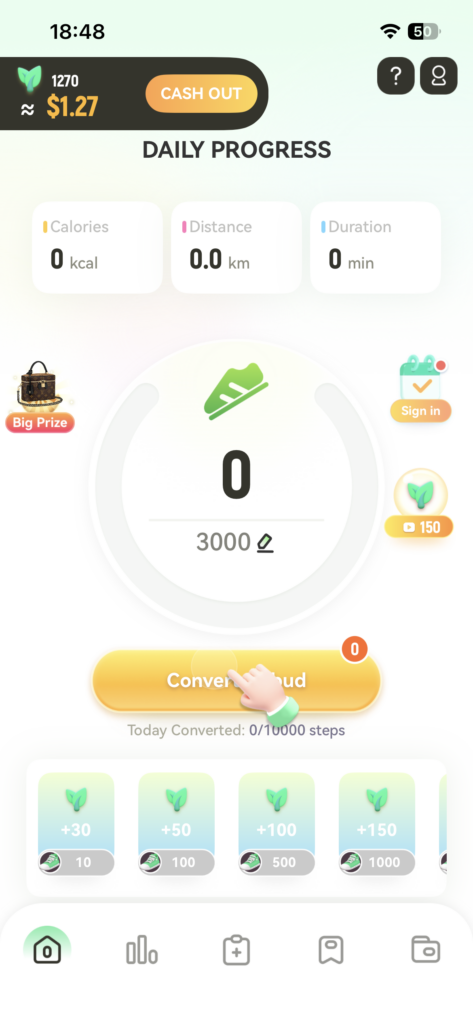
You can:
- Set daily step goals
- Earn points when you hit them
But here’s the key insight:
👉 Steps are NOT the main earning source
Compared to:
- Ads
- Tasks
- Bonus systems
Walking is more like:
👉 A supporting mechanic, not the core driver
Reward Games — High Hype, Low Probability
The app also includes mini-games like smashing golden eggs.

You can win:
- Device rewards (like Nintendo Switch)
- Gift cards
- Other items
But in practice:
- You usually get fragments
- Full rewards require many pieces
This is another common system:
👉 Progress illusion
You feel like you’re getting closer — but it takes a long time to complete.
So… Is Pacefit Legit or a Scam?
Short answer:
👉 Pacefit is legit — but not in the way most people expect
- ✔️ You can earn points
- ✔️ Points convert to real rewards
- ✔️ Cashout options exist
But:
👉 It’s not a “walk and get paid instantly” app
Instead, it’s:
👉 A reward + ad engagement system with a fitness theme
How Much Can You Actually Earn?
Let’s keep expectations realistic.
Typical earnings:
- Light users: $1–$3 per week
- Active users: $5–$15 per month
Even with consistent use:
👉 It’s slow
And most of your earnings will come from:
- Watching ads
- Completing tasks
- Daily engagement
The Hidden Strategy Behind Apps Like This
This is something many reviews don’t explain clearly.
Apps like Pacefit usually follow a model:
- Attract users with “easy money” messaging
- Provide small but frequent rewards
- Use ads to monetize engagement
- Slow down earnings over time
👉 It’s not a scam — it’s a business model
Once you understand this, the app makes a lot more sense.
Pros and Cons — Honest Breakdown
👍 Pros
- Easy to start
- Clear reward system
- Encourages daily activity
- Multiple earning methods
👎 Cons
- Heavy ad reliance
- Very slow earnings
- Big rewards are mostly unreachable
- Walking alone doesn’t generate much income
Tips — How to Use Pacefit Smartly
🎯 Don’t rely on steps alone
Most earnings come from other features
📅 Log in for timed chests
These add up over time
📺 Use ads selectively
Don’t overdo it for tiny gains
💰 Cash out early
Avoid letting balance sit too long
Is Pacefit Worth It?
It depends on your expectations.
👉 Worth it if:
- You want small passive rewards
- You already walk daily
- You don’t mind ads
👉 Not worth it if:
- You expect real income
- You want fast payouts
- You dislike ad-heavy apps
Final Verdict
Pacefit is not a scam — but it’s also not a high-earning app.
👉 It sits in the middle:
- Legit reward system
- Slow earning pace
- Engagement-focused design
If you treat it as:
👉 A small bonus app (not an income source)
Then it works fine.
Final Thought
Pacefit doesn’t really pay you for walking.
👉 It pays you for staying active inside the app
And once you see that clearly, you can decide if it’s actually worth your time.